
Robot-Assisted Knee Replacement
Robotic knee replacement, more accurately called robot-assisted knee replacement, is a significant advancement in orthopedic surgery. It combines the expertise of the surgeon with the high precision of robotic technology. The fundamental goal remains the same as traditional knee replacement—to remove damaged cartilage and bone and replace it with an artificial joint (prosthesis). The key difference is the enhanced planning, accuracy, and execution provided by the robotic assistant.
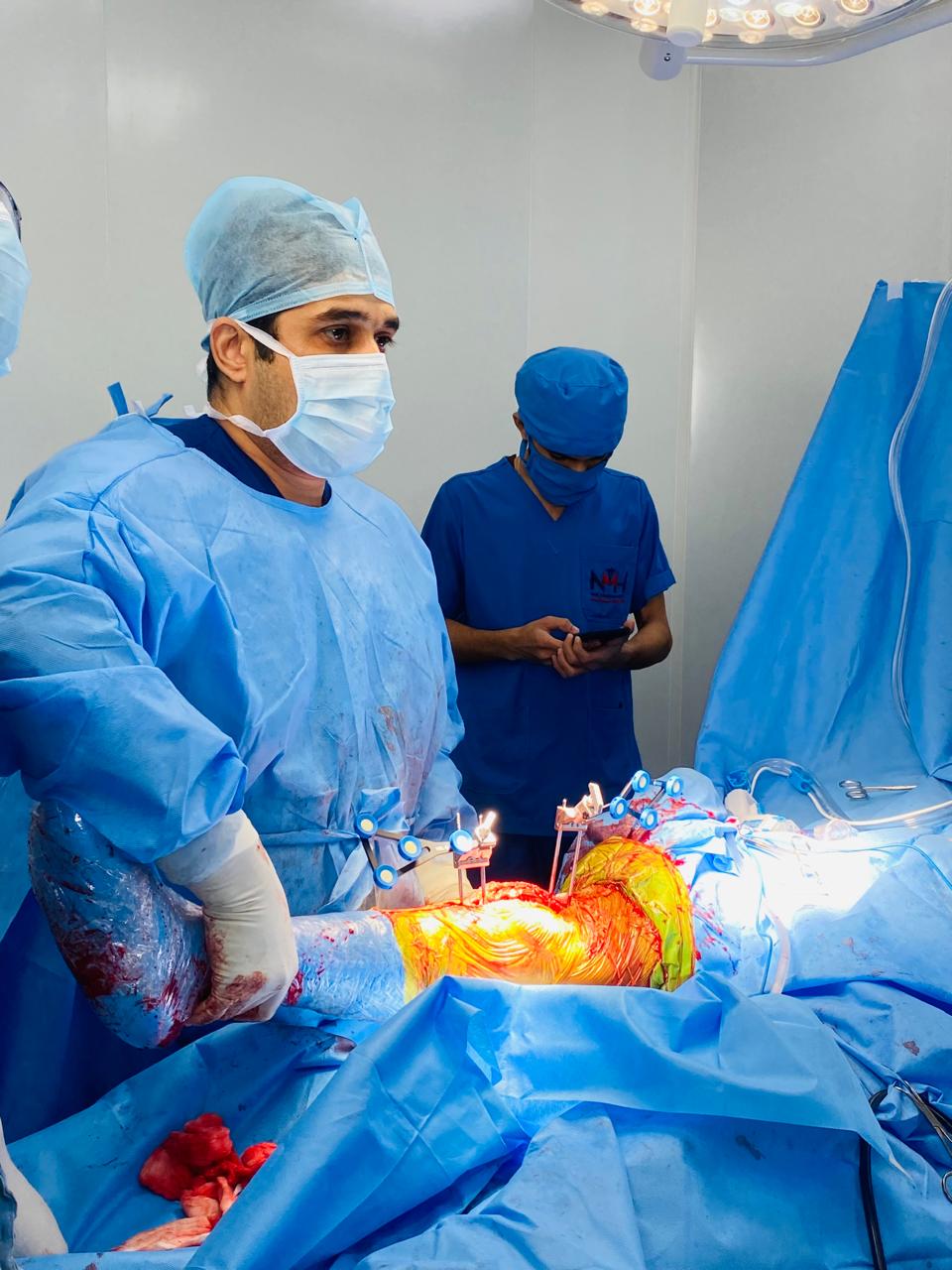
The Process: Preoperative Planning and Surgery
The procedure is divided into two main phases: detailed planning and surgical execution.
1. Preoperative Planning
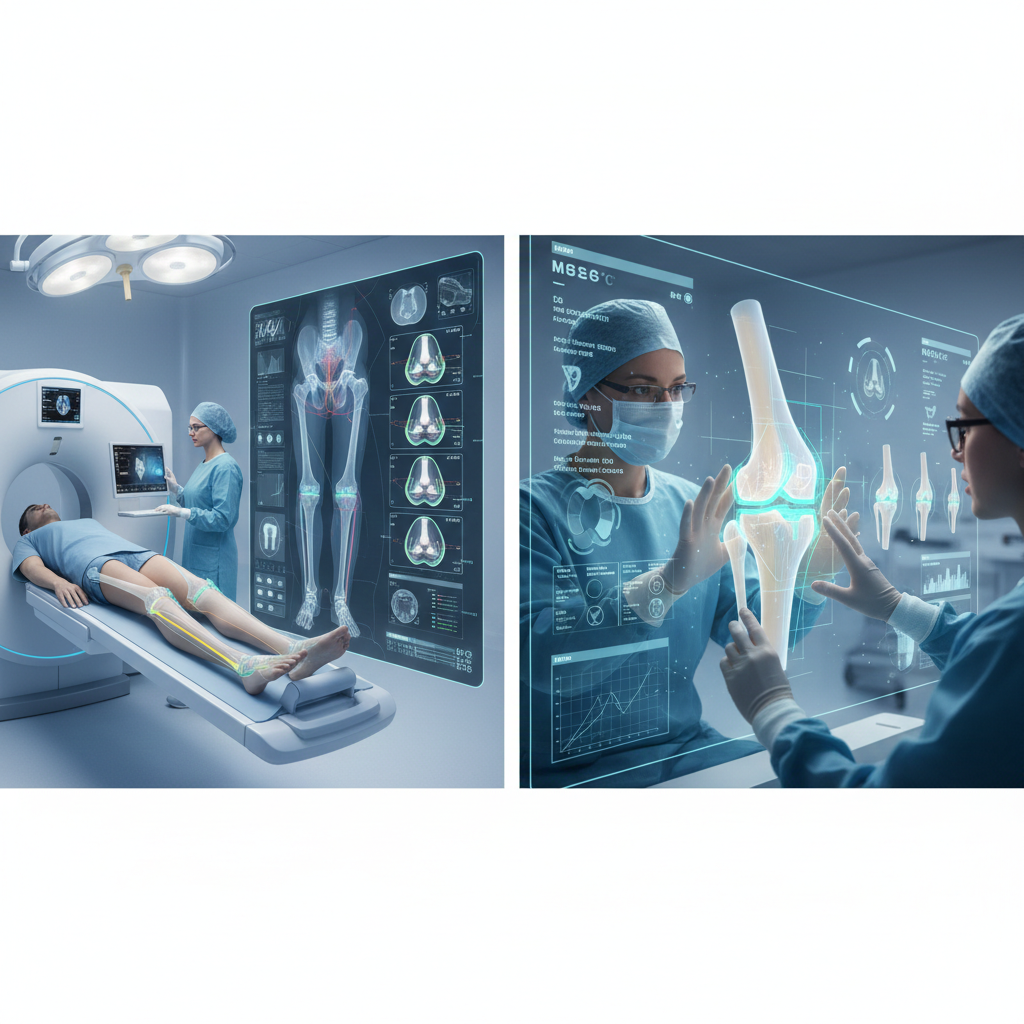
3D Imaging: Advanced imaging, often a CT scan or special X-rays, is taken of the patient’s knee, hip, and ankle.
Customized 3D Model: This imaging is used to create a detailed, patient-specific 3D virtual model of the knee joint, bone structure, and surrounding tissues.
Surgical Plan: The surgeon uses this 3D model on the robotic system’s software to virtually plan every step of the surgery. This includes:
Determining the optimal size and placement of the knee implant.
Precisely mapping
the exact angle and depth of bone cuts needed (down to the millimeter and degree).
Planning for soft tissue and ligament balancing to ensure the new joint functions naturally.
Here’s an illustration of how a 3D model is created and used for surgical planning:
2. Surgical Execution
Access: The surgeon makes an incision (often smaller than traditional surgery) to access the knee joint.
Registration: Tracking pins (small temporary pins) are placed into the bone. Optical trackers are attached to these pins and the robotic system, allowing the computer to track the patient’s knee position in real-time. This ensures the robot’s virtual plan matches the patient’s actual anatomy.
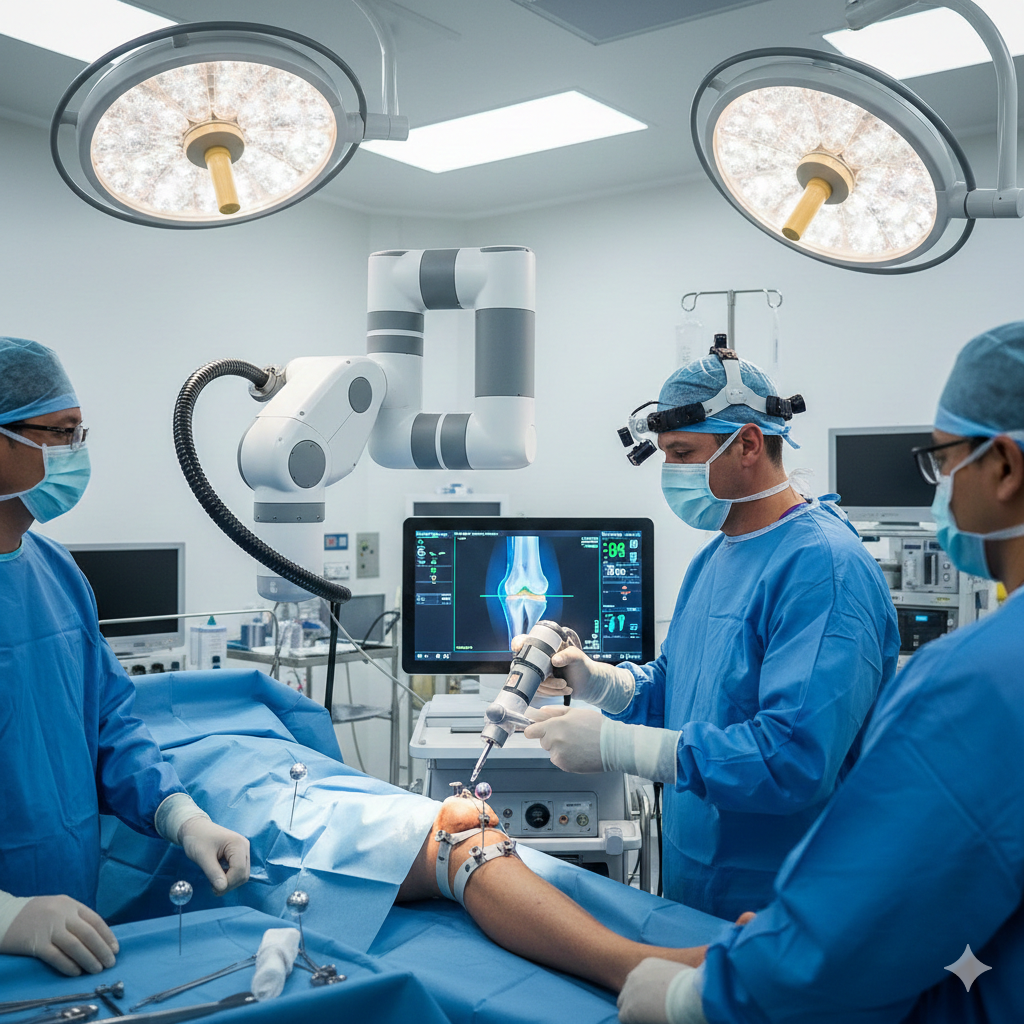
Robotic Guidance: The surgeon uses a hand-held surgical tool (like a saw or burr) that is attached to, or guided by, the robotic arm.
Precision Cuts: The robotic system enforces the surgeon’s pre-planned boundary. It provides visual, auditory, and sometimes haptic feedback (tactile vibration/resistance) to ensure the bone cuts are executed with extreme accuracy, preventing the surgeon from cutting beyond the planned area and protecting healthy tissue.
This image demonstrates the surgeon interacting with the robotic arm for precise bone resection:
Implant Placement: The damaged tissue is removed, and the robotic system assists in ensuring the new prosthetic components are aligned and positioned exactly according to the customized plan.
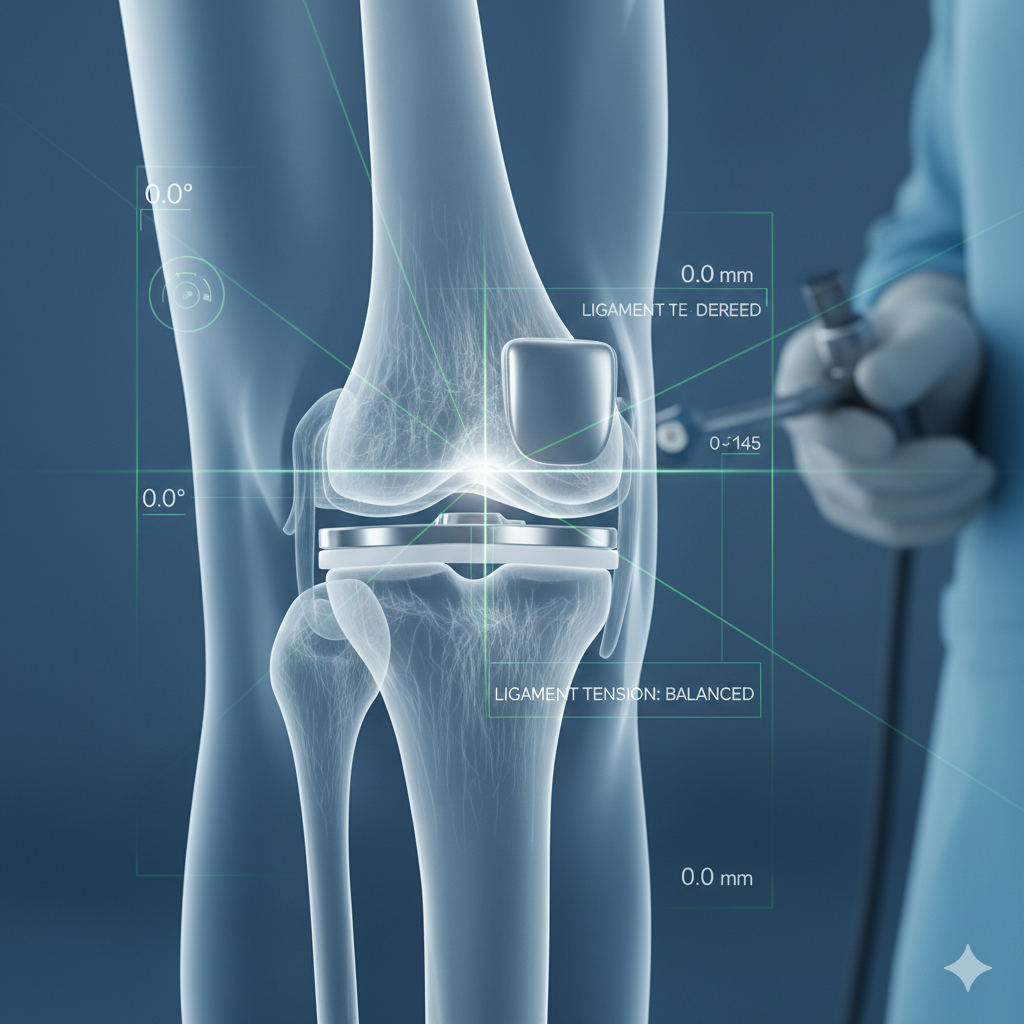
Soft Tissue Balancing: The system provides real-time data on ligament tension and joint stability, allowing the surgeon to make fine-tuned adjustments for an optimal, balanced knee.
Closure: Once the implant is secured and alignment is verified, the incision is closed with stitches or staples.
Here’s an illustration of the artificial knee joint (prosthesis) in place within the bone, showcasing proper alignment:
Summary
Robotic knee replacement combines technological innovation with surgical skill to provide more precise, predictable, and successful outcomes, helping patients regain mobility and quality of life.