
Detailed Description: Robotic Hip Replacement
Robotic hip replacement is an advanced orthopedic procedure that uses robotic-assisted technology to enhance the accuracy and outcomes of hip joint replacement surgery. It is commonly recommended for patients with severe hip arthritis, avascular necrosis, fractures, or chronic hip pain that has not responded to conservative treatments like medication, physical therapy, and injections.
How the Procedure Works
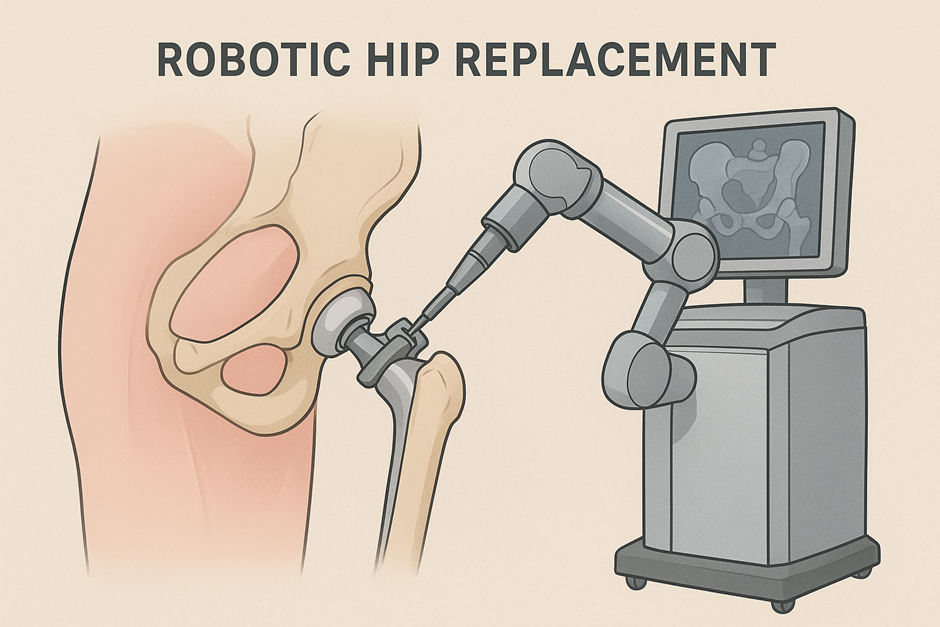
Robotic hip replacement begins with detailed pre-operative planning. Advanced imaging (such as a CT scan) is used to create a precise 3D model of the patient’s hip anatomy. This digital model helps the surgeon determine the ideal size, alignment, and positioning of the artificial hip implant.
During surgery, the surgeon uses a robotic system—either a robotic arm or a computer-guided navigation platform—to execute the surgical plan. The robot provides real-time data and feedback, ensuring extremely accurate bone preparation and implant placement. While the robot assists, the surgeon remains in full control at all times.
Benefits of Robotic Hip Replacement
-
- Superior Precision: Enables highly accurate positioning of the hip implant, improving joint stability and movement.
-
- Personalized Planning: Customized to each patient’s anatomy for better fit and function.
-
- Reduced Tissue Damage: Minimally invasive approach minimizes muscle and soft-tissue injury.
-
- Less Pain & Faster Recovery: Patients experience reduced postoperative pain and quicker return to normal activities.
-
- Improved Joint Function: More natural feel and motion due to anatomical alignment.
-
- Longer Implant Life: Precise placement reduces wear and improves implant longevity.
Who Can Benefit
Robotic hip replacement is suitable for patients suffering from:
-
- Osteoarthritis or rheumatoid arthritis
-
- Hip joint deformity or dysplasia
-
- Hip fractures or trauma
-
- Avascular necrosis
-
- Persistent hip pain limiting mobility
Recovery Process
Most patients begin standing and walking with support within 24 hours after surgery. Physiotherapy starts early to restore strength and mobility. Full recovery typically takes a few weeks to months, depending on overall health and activity level, often faster than with traditional hip replacement.
Summary
Robotic hip replacement combines cutting-edge technology with expert surgical skill to deliver improved accuracy, safety, and long-term functional results. This innovative procedure enhances patient comfort, supports faster recovery, and contributes to better quality of life.