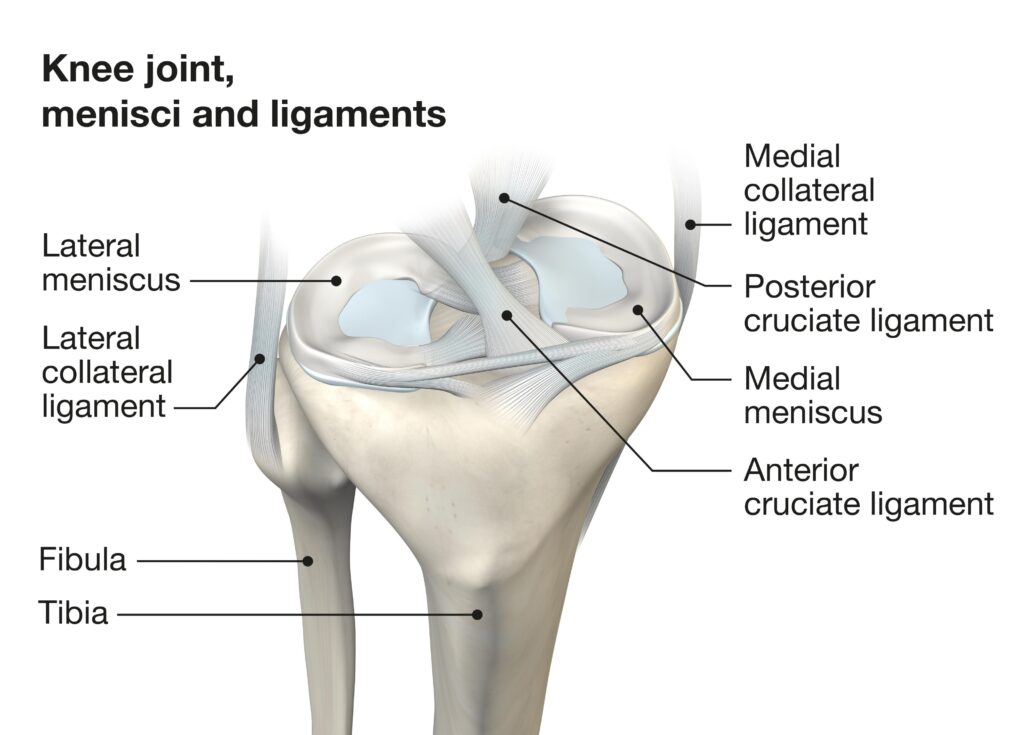
ACL, PCL & Meniscus – Detailed Description
1 ACL (Anterior Cruciate Ligament)
What is ACL?
The Anterior Cruciate Ligament is one of the major ligaments inside the knee joint. It connects the femur (thigh bone) to the tibia (shin bone) at the center of the knee. It controls forward movement and rotational stability of the knee.
Function
- Prevents the tibia from moving forward excessively
- Provides rotational stability for twisting movements
- Essential for jumping, landing, pivoting and sudden direction change
Causes of ACL Injury
- Sudden twisting of knee
- Jump landing incorrectly
- Rapid change of direction (cutting movements)
- Direct hit to the knee (sports like football, kabaddi)
Symptoms
- A pop sound at the time of injury
- Immediate swelling
- Severe pain and difficulty walking
- Instability or “knee giving way”
Treatment
- Physiotherapy for mild tears
- ACL Reconstruction surgery for complete tear using graft (Hamstring/Patellar tendon)
- Rehabilitation for 6–9 months
2 PCL (Posterior Cruciate Ligament)
What is PCL?
The Posterior Cruciate Ligament is located behind the ACL and is stronger. It connects the femur to the tibia and controls backward movement of the tibia relative to the femur.
Function
- Prevents tibia from moving backwards excessively
- Stabilizes knee especially during downhill walking, kneeling and bending
Causes of PCL Injury
- Dashboard injury in car accidents (knee hits dashboard)
- Falling on a bent knee
- Heavy direct blow to front of the knee
Symptoms
- Pain at the back of the knee
- Swelling
- Difficulty in squatting or climbing down stairs
- Knee instability
Treatment
- RICE, knee brace, physiotherapy for partial tear
- PCL Reconstruction surgery for severe tears
- Rehabilitation 4–8 months
3 Meniscus
What is the Meniscus?
The meniscus is a C-shaped cartilage cushion located between the femur and tibia. Each knee has two menisci:
- Medial Meniscus (inner side)
- Lateral Meniscus (outer side)
Function
- Shock absorber for the knee joint
- Helps smooth movement between bones
- Provides stability and distributes body weight evenly
Causes of Meniscus Injury
- Twisting of the knee while the foot is fixed
- Age-related degeneration in older adults
- Deep squatting or heavy lifting
Symptoms
- Pain on joint line (inner or outer side of the knee)
- Swelling
- Locking or catching of the knee
- Clicking sound during movement
- Difficulty bending or straightening the knee fully
Treatment
- Physiotherapy and pain medication for small tears
- Arthroscopic meniscus repair or partial meniscectomy for complex tears
- Return to sports in 6–12 weeks depending on repair
Summary Table
| Structure | Function | Common Cause | Symptoms | Treatment |
| ACL | Forward & rotational stability | Jumping, twisting | Pop, swelling, instability | Reconstruction surgery + rehab |
| PCL | Backward stability | Dashboard injury, fall | Pain behind knee | Brace / Reconstruction |
| Meniscus | Shock absorption | Twisting, squatting | Locking, joint pain | Arthroscopy / physiotherapy |
Image-1 -ACL
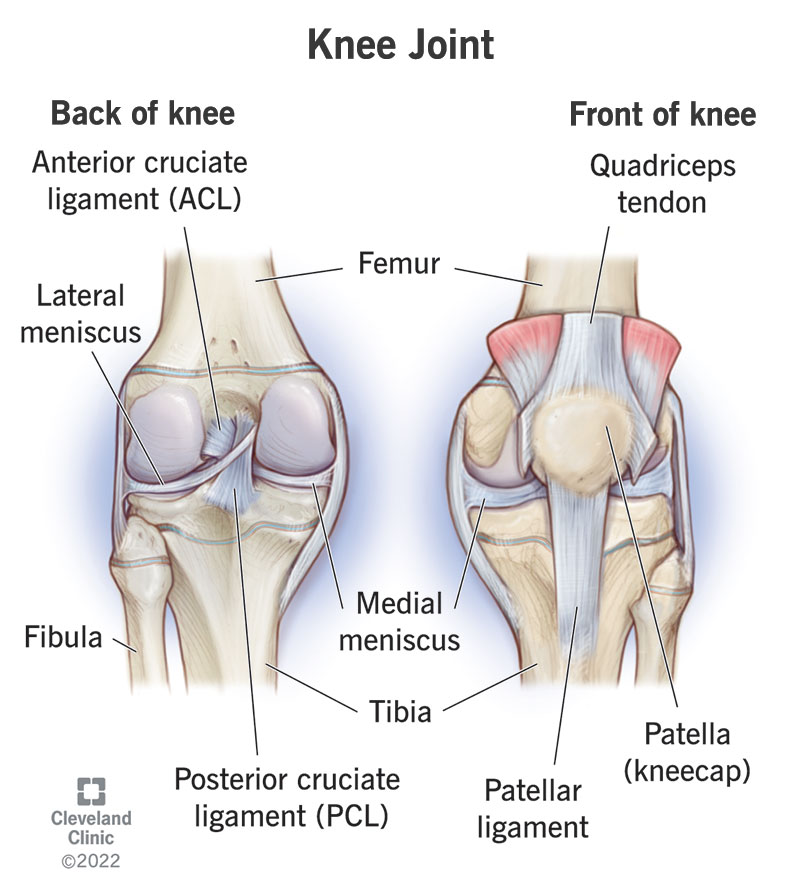
Image-2 – PCL
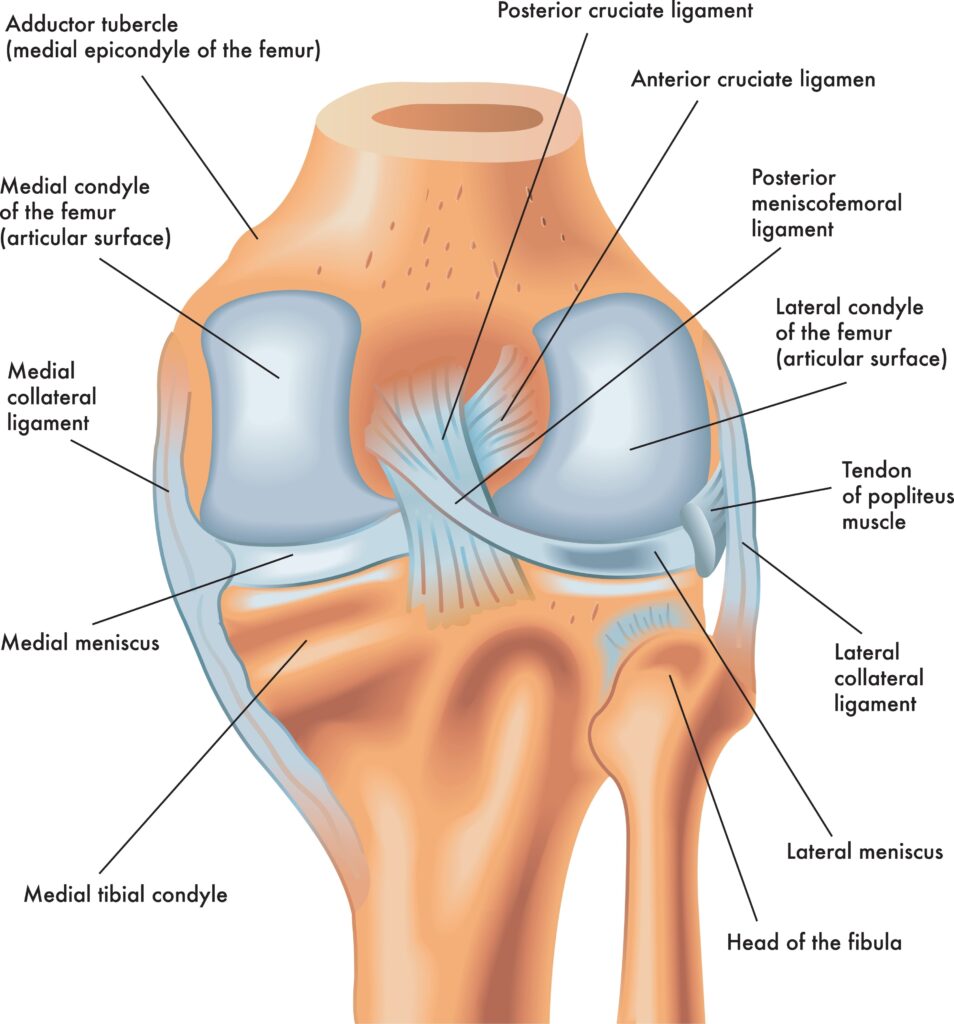
Image-3 Meniscus